
More usable mold space
Large daylight, wide tie-bar spacing and an unrestricted mold-opening stroke support deep parts and bulky tooling.
Two-platen layout → open mold area → easier large-mold accommodation
SOUND Machinery · DP Series
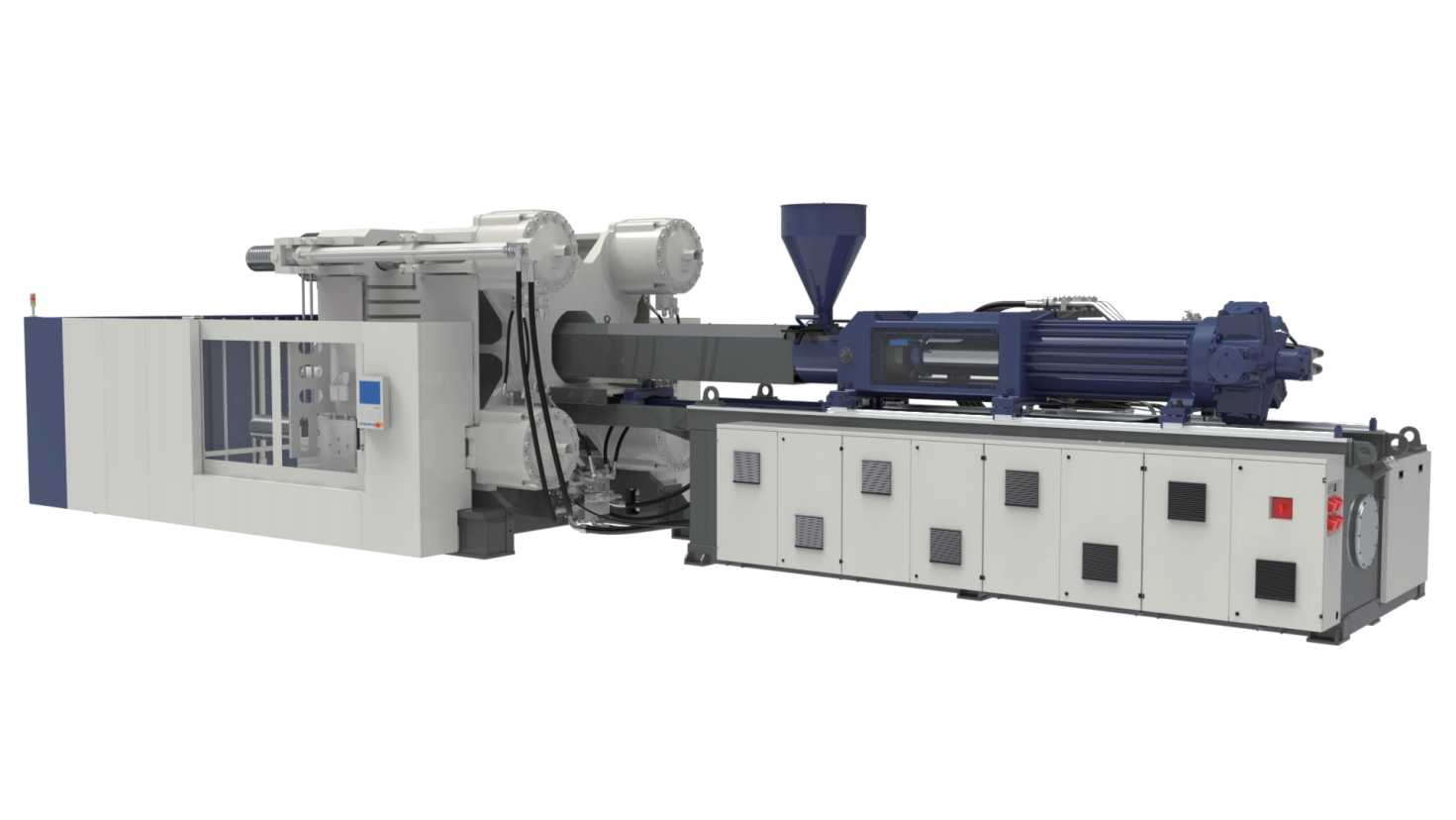
More mold space in a compact machine layout. The servo-hydraulic SOUND DP platform is built for large automotive, appliance, logistics and industrial parts—with modular clamping and injection combinations matched to your mold and process.
Final machine configuration is selected from your part, material, mold and production target.
Why two-platen
The DP architecture combines a short machine envelope with generous mold space, direct hydraulic clamping and flexible injection-unit selection. Each benefit below connects the machine structure to a practical production result.
Large daylight, wide tie-bar spacing and an unrestricted mold-opening stroke support deep parts and bulky tooling.
Two-platen layout → open mold area → easier large-mold accommodation
The two-platen arrangement shortens the clamping section compared with a conventional three-platen large machine.
Fewer structural platens → shorter layout → better floor-space use
Rigid platens, a box-type body, guided platen support and synchronized locking help maintain repeatable mold motion.
Rigid structure + guided support → controlled movement → consistent molding
Clamping, injection, screw, controller, interface and automation options can be combined around the application.
Modular platform → application-specific pairing → less compromise
Machine architecture
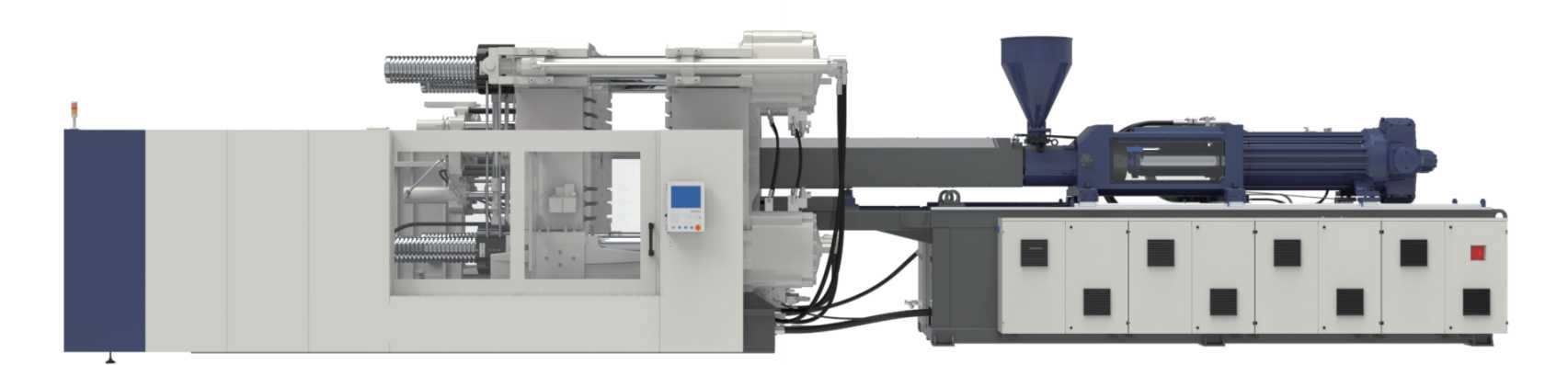
DP is a modular large-machine platform. Its two-platen clamp makes room for large molds while the injection unit, screw system, controls and interfaces are selected for the material, part geometry and required output.
Large opening stroke and flexible mold height for deep-cavity parts and large tooling.
Reduced sliding friction supports a clean mold area and low mechanical wear.
Clamping and SP injection units can be paired to match shot size, pressure and plasticizing demand.
Core technology
Explore the parts of the DP machine that matter most to mold movement, injection response, process stability and operator control.
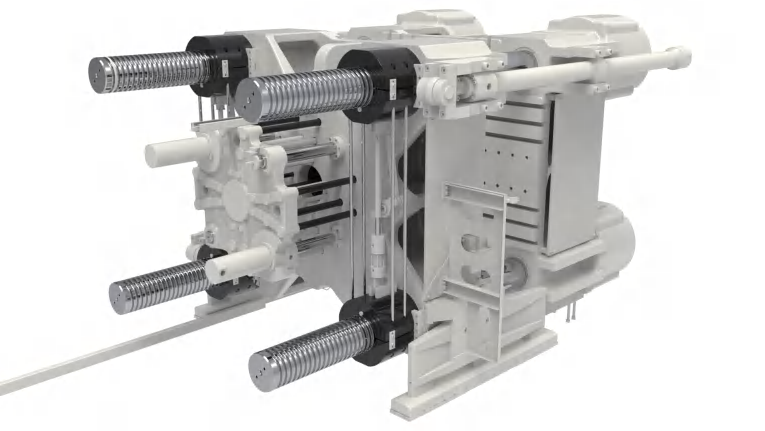
A box-type clamping body, parallel platens, T-type linear guidance and synchronized locking provide the mechanical foundation for stable mold motion.
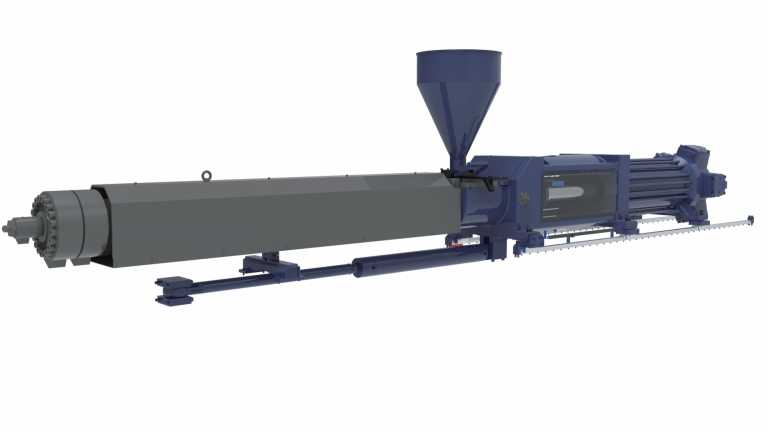
The compact single-cylinder injection structure combines low inertia with a rigid base. Multiple SP injection units and screw diameters let the system be matched to the part and resin.
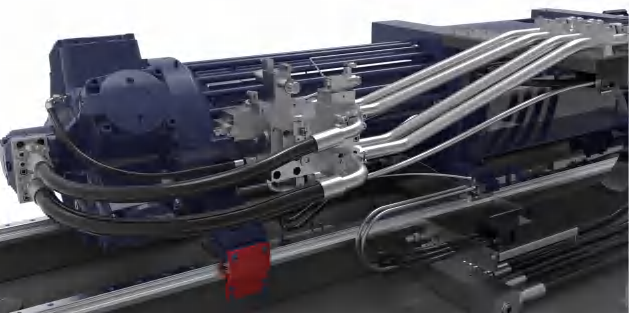
Proportional control and independent oil conditioning support smooth mold motion and stable machine operation across changing cycle and ambient conditions.
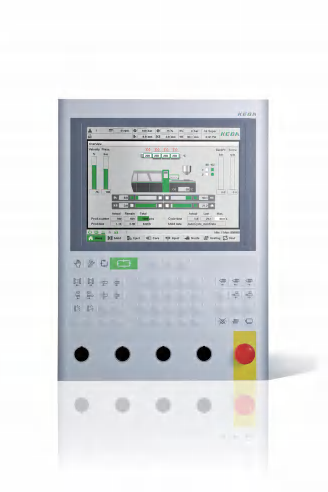
The specified Austrian KEBA control platform manages pressure, speed, temperature and position with a clear operator interface. Controller and screen are selected with the machine configuration.
Application fit
The correct DP configuration is driven by more than tonnage. Mold dimensions, resin, projected area, shot weight, flow length, cycle target and automation all influence the final machine.
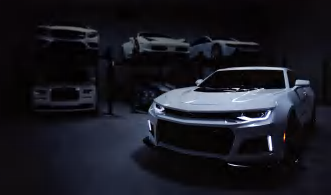
Bumpers, lamps, trim and other large parts that need mold space, controlled movement and automation access.
Selection focus: surface quality · large tooling · robot access
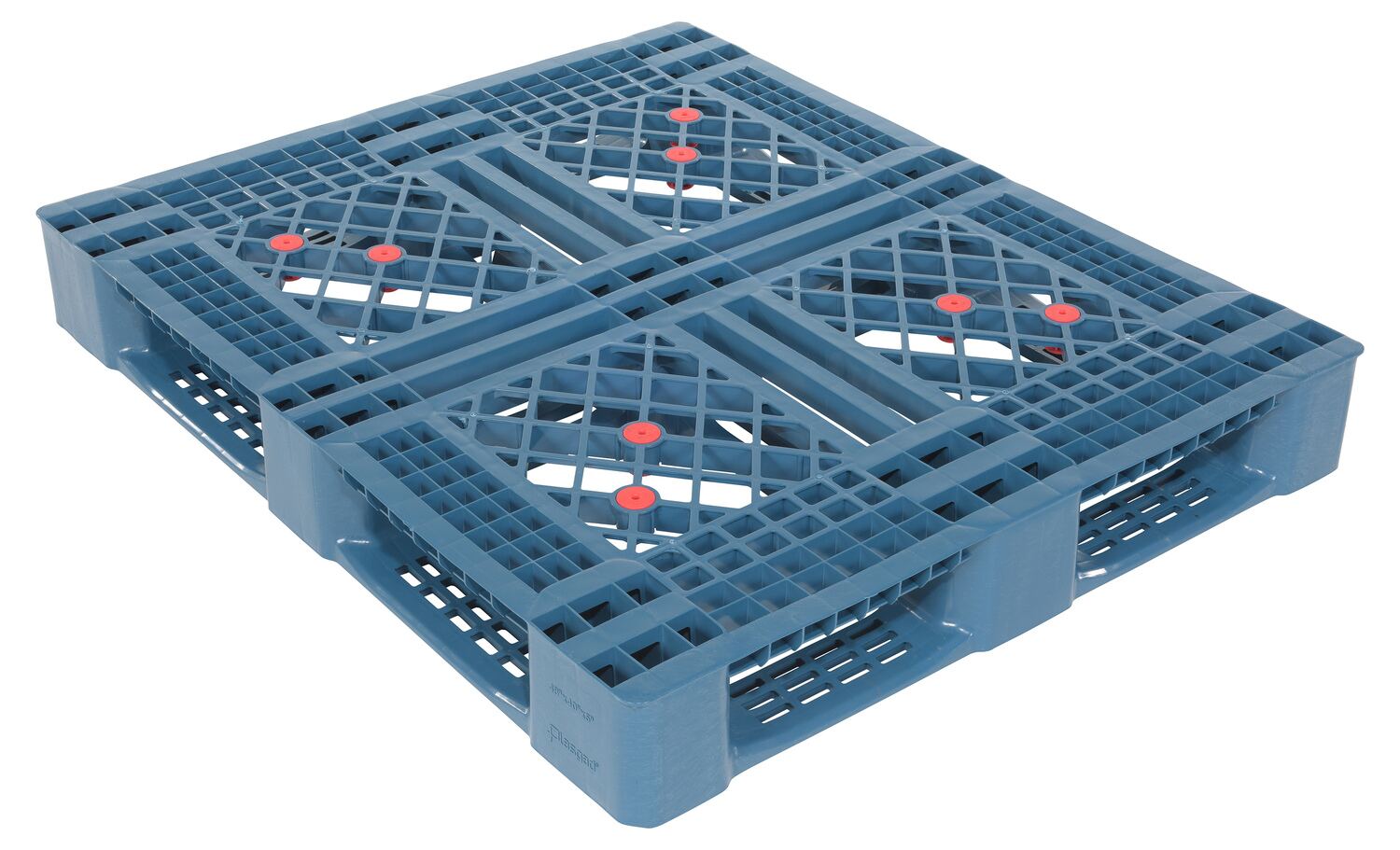
Large projected areas and durable materials require balanced clamping, robust plasticizing and reliable part handling.
Selection focus: shot size · cooling · ejection and handling
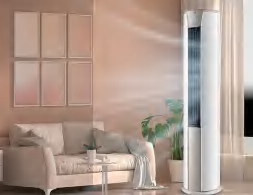
Air-conditioner panels and appliance shells benefit from stable injection control and generous mold accommodation.
Selection focus: appearance · dimensions · low-stress molding
Deep parts need sufficient daylight and mold-opening stroke, with ejector and robot travel planned as one system.
Selection focus: daylight · opening stroke · demolding path
Application images illustrate common DP use categories and are not presented as customer case studies. Final suitability depends on part, material and tooling data.
Model range
Use the model finder for a first clamping-unit comparison. SANTSAI and SOUND engineers will confirm clamp force, shot size, screw, plasticizing capacity, machine dimensions and options against your production data.
How to read the range: the supplied DP catalog lists twelve standard clamping sizes from DP450 to DP4000. The DP9000-GJ2100 is presented separately as a SOUND ultra-large project for large-diameter pipe fittings and infrastructure products.
DP450 — 4,500 kN
DP650 — 6,500 kN
DP900 — 9,000 kN
DP1100 — 11,000 kN
DP1300 — 13,000 kN
DP1600 — 16,000 kN
DP1850 — 18,500 kN
DP2100 — 21,000 kN
DP2400 — 24,000 kN
DP2800 — 28,000 kN
DP3300 — 33,000 kN
DP4000 — 40,000 kN
SP1700 — 1,696 cm³
Nominal injection capacity and PS shot weight update with the selected SP unit.
Catalog reference only. kN values show clamping force; model names indicate the nominal tonnage class. A larger clamp is not automatically the best process choice.
| Model | Clamping force | Tie-bar spacing H×V | Mold height min–max | Mold-opening stroke | Max daylight | Max mold weight |
|---|---|---|---|---|---|---|
| 4,500 kN | 850 × 800 mm | 350–900 mm | 1,100 mm | 1,450 mm | 6.5 t | |
| 6,500 kN | 1,040 × 910 mm | 400–950 mm | 1,350 mm | 1,750 mm | 9.5 t | |
| 9,000 kN | 1,180 × 1,000 mm | 500–1,100 mm | 1,600 mm | 2,100 mm | 13 t | |
| 11,000 kN | 1,270 × 1,100 mm | 550–1,250 mm | 2,000 mm | 2,550 mm | 16 t | |
| 13,000 kN | 1,390 × 1,280 mm | 600–1,350 mm | 2,250 mm | 2,850 mm | 23 t | |
| 16,000 kN | 1,550 × 1,450 mm | 700–1,550 mm | 2,550 mm | 3,250 mm | 33 t | |
| 18,500 kN | 1,650 × 1,550 mm | 750–1,600 mm | 2,650 mm | 3,400 mm | 40 t | |
| 21,000 kN | 1,800 × 1,600 mm | 800–1,700 mm | 2,800 mm | 3,600 mm | 50 t | |
| 24,000 kN | 1,950 × 1,700 mm | 850–1,800 mm | 2,950 mm | 3,800 mm | 60 t | |
| 28,000 kN | 2,100 × 1,800 mm | 900–2,000 mm | 3,200 mm | 4,100 mm | 70 t | |
| 33,000 kN | 2,270 × 1,900 mm | 950–2,000 mm | 3,350 mm | 4,300 mm | 75 t | |
| 40,000 kN | 2,400 × 2,000 mm | 1,000–2,200 mm | 3,500 mm | 4,500 mm | 85 t |
Clamping data above follows the supplied DP catalog. Injection-unit combinations, machine dimensions, power, oil volume, interfaces and safety packages vary by configuration. SOUND reserves the right to make technical changes.
Large-machine engineering
DP9000-GJ2100 sits beyond the standard DP450–DP4000 catalog lineup. SOUND presents the machine for large-diameter pipe fittings and infrastructure products, showing how its two-platen architecture scales to exceptional mold and shot requirements.
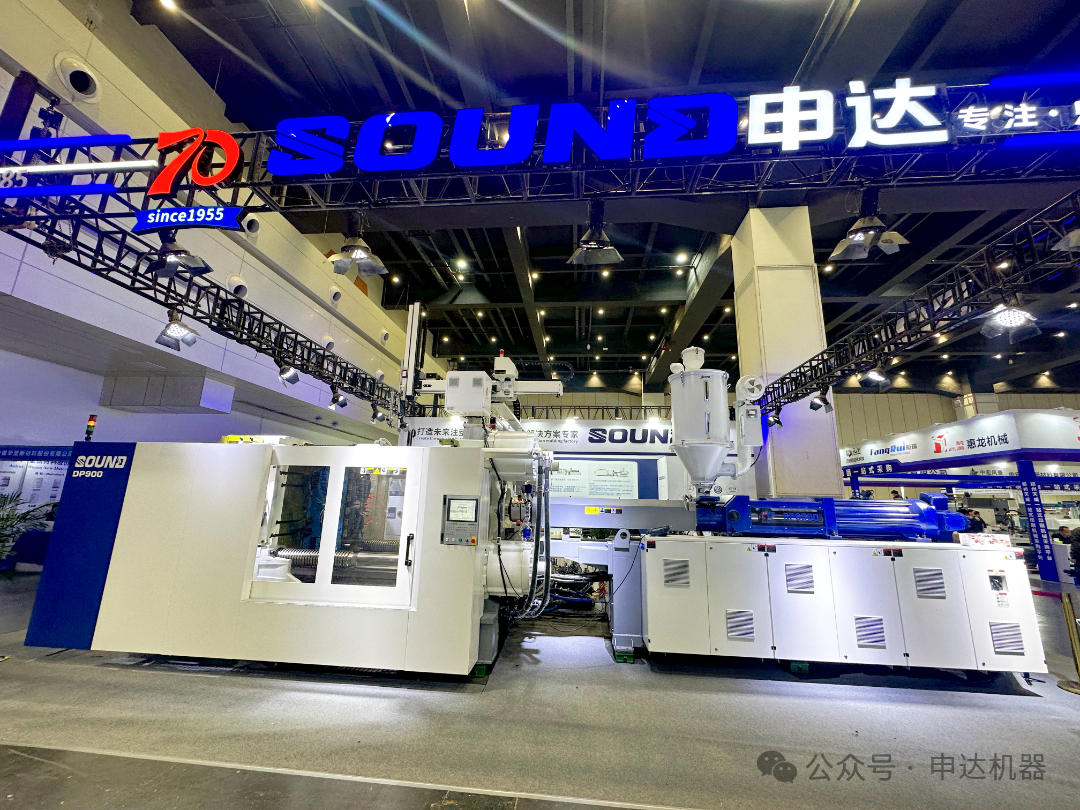
Configuration options
Options should be selected as a system—not as a checklist. Resin behavior, color changes, mold functions, robot sequence, regional safety requirements and factory data standards all affect the final specification.
Confirm material, projected area, shot weight, mold dimensions, functions and demolding path.
Select clamping force, daylight, opening stroke, SP unit, screw and plasticizing capacity.
Coordinate robot, mold temperature, material handling, cooling, guarding and interfaces.
Finalize layout, utilities, regional safety, delivery scope, commissioning and training.
Start with your application
Send the information you already have. We will help identify the clamping unit, injection unit, screw, automation and utility questions that still need to be confirmed.
Frequently asked questions